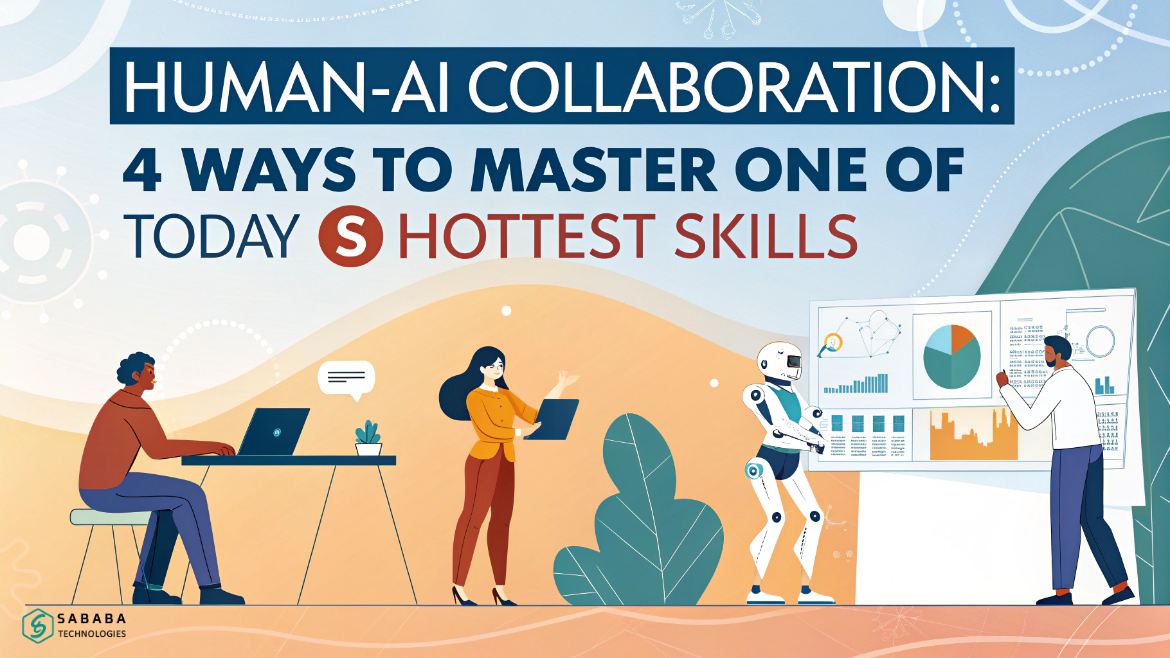
Human-AI Collaboration is reshaping modern work. Learn how AI skills help professionals collaborate smarter and stay competitive.
Artificial intelligence is no longer something happening around us. It is happening with us. From content creation to customer support and decision-making, AI now works side by side with people. That shift has made Human-AI Collaboration one of the most valuable professional abilities today.
However, mastering this skill is not about replacing human intelligence. Instead, it is about learning how to combine human judgment with machine efficiency. Professionals who build strong AI Skills will not only stay relevant but also unlock better outcomes, faster workflows, and sharper insights.
Let’s explore what Human-AI Collaboration really means, why it matters, and four realistic ways to master it.
What Is Human-AI Collaboration?
At its core, Human-AI Collaboration is the ability to work with AI systems rather than simply using them as tools. This partnership blends machine capabilities—such as speed, pattern detection, and data processing—with human strengths like empathy, creativity, and critical reasoning.
While AI handles repetition and analysis, humans guide direction and meaning. As a result, work becomes more strategic and less mechanical. This balance is what separates basic AI usage from true collaboration.
More importantly, collaboration applies across industries. Marketing teams use AI for insights, developers rely on it for optimization, and leaders use it to evaluate risks. In each case, AI Skills determine how effective that partnership becomes.
Why Human-AI Collaboration Is a Must-Have Skill
The modern workplace rewards adaptability. As AI becomes embedded in daily operations, professionals who understand how to collaborate with it gain a clear advantage.
Organizations benefit too. Teams that practice Human-AI Collaboration often experience:
- Faster decision cycles
- Improved accuracy
- Reduced manual workload
- Better use of employee time
Meanwhile, individuals with strong AI Skills tend to stand out in hiring, promotions, and leadership roles. Instead of competing with automation, they learn how to guide it.
Simply put, the future belongs to people who know when to rely on AI—and when to rely on themselves.
4 Ways to Master Human-AI Collaboration
Human-AI Collaboration does not happen automatically. It develops through intention, experimentation, and reflection. Below are four practical ways to build this skill in real work environments.
1. Treat AI as a Working Partner, Not a Shortcut
Many people approach AI expecting instant perfection. When results fall short, they lose trust. Instead, think of AI as a junior teammate—capable, fast, but still learning.
For example, when drafting content or analyzing data, review outputs carefully. Adjust tone, refine logic, and guide the system with clearer instructions. Over time, this back-and-forth strengthens Human-AI Collaboration and improves outcomes.
This approach also sharpens AI Skills, because users learn how AI responds to guidance rather than relying on guesswork.
2. Learn How AI Thinks Before Expecting Results
Understanding how AI works—even at a high level—makes collaboration smoother. While you do not need to become an engineer, knowing AI’s strengths and blind spots helps you use it wisely.
AI excels at recognizing patterns and summarizing information. However, it struggles with nuance, ethics, and context. When professionals recognize these limits, they ask better questions and make smarter decisions.
As a result, Human-AI Collaboration becomes intentional rather than reactive. At the same time, AI Skills grow through awareness, not blind dependence.
3. Improve Prompting Through Clarity and Curiosity
Good prompts lead to good results. Poor prompts create confusion. Therefore, learning how to communicate clearly with AI is essential.
Instead of vague instructions, provide context, constraints, and goals. Additionally, ask follow-up questions such as:
- What assumptions are you making?
- What information might be missing?
- How could this be improved?
This dialogue transforms AI from a passive system into an active collaborator. Over time, strong prompting becomes one of the most practical AI Skills in daily work.
4. Apply Human Judgment to Every AI Output
No matter how advanced AI becomes, human judgment remains essential. AI can suggest options, but it cannot fully evaluate consequences, emotions, or long-term impact.
Therefore, critical thinking must guide every output. Review facts, challenge conclusions, and decide when originality matters more than efficiency. This balance defines successful Human-AI Collaboration.
Professionals who combine skepticism with curiosity build trust—not only in AI systems but also in their own decision-making abilities.
Measuring the Impact of Human-AI Collaboration
Measuring collaboration goes beyond speed or volume. While productivity matters, deeper indicators often reveal more value.
For instance:
- Are teams making better decisions?
- Has creative output improved?
- Do employees feel more confident using AI?
- Is work becoming more strategic?
Organizations that track adoption, satisfaction, and outcome quality gain a clearer picture of how AI Skills contribute to long-term growth.
The Long-Term Value of Human-AI Collaboration
As AI continues to evolve, collaboration—not automation—will define success. Tools will change, but the need for thoughtful human involvement will remain constant.
Professionals who invest in Human-AI Collaboration develop adaptability, resilience, and leadership readiness. Meanwhile, organizations that support learning and experimentation create cultures that scale with technology instead of fighting it.
In this environment, AI Skills become less about technical mastery and more about intelligent partnership.
Working alongside intelligent systems is no longer optional. It has become a core capability that shapes how people operate, reason, and deliver value. By treating technology as a partner, understanding how it responds, communicating with clarity, and applying sound judgment, professionals can collaborate effectively and achieve stronger outcomes.
Those who develop strong AI Skills today position themselves for relevance tomorrow. Not because AI replaces them—but because they know how to work with it.
FAQs
1. What does working with AI mean in simple terms?
Human-AI Collaboration means humans and AI systems working together, each contributing their strengths to achieve better results.
2. Why are AI Skills Important for professionals today?
AI Skills help professionals stay competitive, work more efficiently, and adapt to evolving job roles influenced by automation.
3. Can Human-AI Collaboration improve creativity?
Yes. AI can generate ideas quickly, while humans refine, evaluate, and add originality, leading to stronger creative outcomes.
4. Is Human-AI Collaboration only for technical roles?
No. It applies to marketing, sales, HR, operations, leadership, and many other non-technical roles.
5. How can beginners start building AI Skills?
Beginners should experiment with AI tools, learn basic prompting techniques, and practice reviewing outputs critically.
Feeling more like puzzles than solutions? That’s when Sababa steps in.
At Sababa Technologies, we’re not just consultants, we’re your tech-savvy sidekicks. Whether you’re wrestling with CRM chaos, dreaming of seamless automations, or just need a friendly expert to point you in the right direction… we’ve got your back.
Let’s turn your moments into “Aha, that’s genius!”
Chat with our team or shoot us a note at support@sababatechnologies.com. No robots, no jargon, No sales pitches —just real humans, smart solutions and high-fives.
P.S. First coffee’s on us if you mention this blog post!