Human in the loop automation helps teams build AI workflows with control. Learn how Human-in-the-loop (HITL) improves accuracy and trust.
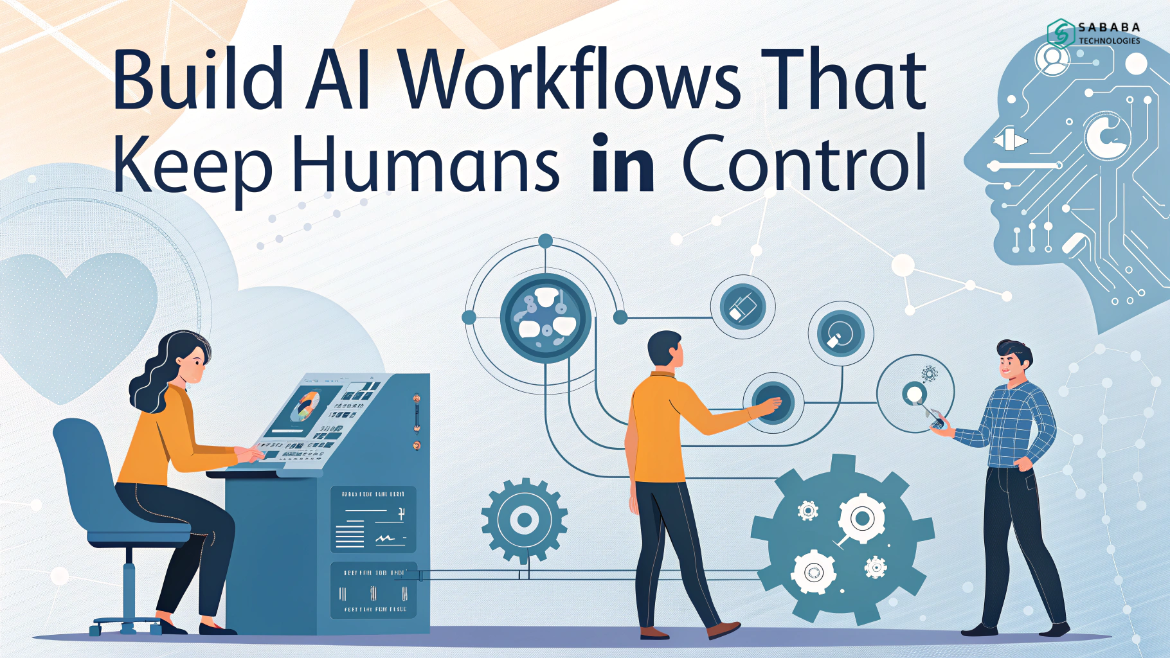
Build AI Workflows That Keep Humans in Control
AI workflows now draft emails, analyze data, moderate content, and even trigger financial actions. However, speed without judgment often creates risk. A single incorrect decision can damage trust, compliance, or revenue. That is exactly where human in the loop automation becomes essential.
Rather than letting AI run unchecked, organizations are shifting toward Human-in-the-loop (HITL) models. These workflows balance automation with human accountability, ensuring that critical decisions never move forward without review. As a result, teams gain speed without surrendering control.
In this guide, you will learn how human in the loop automation works, why it matters, and how to design AI workflows that remain efficient, accurate, and responsible.
What Is Human in the Loop Automation?
Human in the loop automation is a workflow design approach where AI handles execution while humans supervise key decision points. Instead of replacing people, automation supports them.
AI excels at processing large datasets, detecting patterns, and producing drafts. Humans, on the other hand, provide context, ethics, and situational judgment. When combined, Human-in-the-loop (HITL) ensures that automated actions align with real-world expectations.
This model works especially well when:
- Decisions carry financial, legal, or brand risk
- Outputs affect customers or public channels
- Data quality or confidence levels fluctuate
In short, human in the loop automation introduces intentional pauses where human insight matters most.
Why Human Oversight Matters in AI Workflows
AI systems remain probabilistic by nature. They predict outcomes; they do not understand consequences. Therefore, allowing AI to operate independently in sensitive workflows invites unnecessary risk.
By contrast, Human-in-the-loop (HITL) acknowledges a simple truth: automation should accelerate work, not absolve responsibility.
Human oversight helps organizations:
- Catch factual errors before execution
- Prevent reputational damage
- Maintain regulatory compliance
- Reduce costly rework
Moreover, human in the loop automation improves trust internally. Teams feel confident using AI when they know final accountability remains human.
Where to Add Human-in-the-Loop Checkpoints
Not every step needs approval. In fact, excessive reviews slow progress. Instead, effective human in the loop automation focuses on irreversible or high-impact moments.
You should add HITL checkpoints when workflows:
- Publish content externally
- Send customer communications
- Approve payments or refunds
- Modify sensitive records
- Trigger legal or compliance actions
Meanwhile, low-risk steps—data collection, enrichment, or drafting—should run freely. This balance keeps workflows fast while protecting outcomes.
How Human in the Loop Automation Works in Practice
A typical Human-in-the-loop (HITL) workflow follows a simple pattern:
- AI performs analysis or generates output
- The system evaluates confidence or risk
- High-confidence results proceed automatically
- Edge cases pause for human review
- A human approves, edits, or rejects the action
Because of this structure, automation remains efficient while humans intervene only when judgment adds value.
Modern workflow tools, including platforms like n8n, make this model practical by offering wait states, branching logic, notifications, and audit logs.
Real-World Examples of Human-in-the-Loop Automation
1. AI Email Drafting With Approval
AI drafts replies using context and history. However, a human reviews the message before sending. This protects tone, accuracy, and intent.
2. Content Publishing Workflows
Automation researches and drafts articles. Editors approve outlines, review final drafts, and control publishing, ensuring consistent editorial standards.
3. Community Moderation
AI flags suspicious messages. Moderators decide whether to delete, warn, or ignore. Human-in-the-loop (HITL) prevents false positives.
4. Financial Approvals
Automation prepares transactions. Humans approve amounts beyond defined thresholds. Risk stays contained.
5. Customer Support Escalation
AI handles common questions. Complex or emotional cases route to human agents, protecting customer experience.
Best Practices for Designing HITL Workflows
Build Around Decisions, Not Tasks
Avoid reviewing every step. Focus human attention on decisions that cannot be undone.
Provide Context at Review Time
Humans should see why something was flagged, not just the output. Context speeds decisions.
Keep Approvals Simple
Binary choices—approve, revise, reject—prevent bottlenecks and confusion.
Add Timeouts and Escalations
If no response arrives, workflows should escalate or default safely. Automation should never stall indefinitely.
Log Every Decision
Audit trails transform human reviews into learning data, improving future automation accuracy.
Human in the Loop Automation and Responsible AI
Responsible AI is not about slowing innovation. Instead, it is about designing accountability into systems.
Human in the loop automation ensures:
- AI handles complexity
- Automation enforces consistency
- Humans own final responsibility
This shared model reflects reality. AI assists. Humans decide.
This approach offers a practical path forward for organizations adopting AI. Rather than choosing between speed and safety, it delivers both through balanced oversight and smarter decision-making.
By placing human judgment at critical moments, teams reduce risk, improve accuracy, and maintain trust—without sacrificing efficiency. As AI capabilities grow, workflows that respect human oversight will outperform those that rely on automation alone.
The future of AI is not fully autonomous. It is intentionally collaborative.
FAQs
1. What is human in the loop automation?
Human in the loop automation is a workflow approach where AI executes tasks while humans review and approve critical decisions.
2. Why is Human-in-the-loop (HITL) important for AI?
HITL prevents errors, protects compliance, and ensures accountability in AI-driven workflows.
3. When should human approval be added to AI workflows?
Human approval should appear at irreversible or high-risk decision points such as publishing, payments, or customer communications.
4. Does human in the loop automation slow workflows?
No. Well-designed HITL workflows only route edge cases to humans while allowing confident outputs to proceed automatically.
5. Which teams benefit most from HITL workflows?
Marketing, customer support, finance, legal, and operations teams benefit the most from human in the loop automation.
Feeling more like puzzles than solutions? That’s when Sababa steps in.
At Sababa Technologies, we’re not just consultants, we’re your tech-savvy sidekicks. Whether you’re wrestling with CRM chaos, dreaming of seamless automations, or just need a friendly expert to point you in the right direction… we’ve got your back.
Let’s turn your moments into “Aha, that’s genius!”
Chat with our team or shoot us a note at support@sababatechnologies.com. No robots, no jargon, No sales pitches —just real humans, smart solutions and high-fives.
P.S. First coffee’s on us if you mention this blog post!