Discover how multi-agent systems work, explore key frameworks, and follow a step-by-step tutorial to build scalable multi-agent AI workflows.
AI systems are no longer limited to doing one thing at a time. As use cases grow more complex, a single intelligent agent often struggles to reason, act, and scale efficiently. This is where multi-agent systems step in. Instead of forcing one model to do everything, engineers now design teams of specialized agents that collaborate toward a shared goal.
In this guide, you’ll learn how multi-agent AI actually works behind the scenes, which frameworks support different architectures, and how to build a working system step by step. More importantly, you’ll understand when this approach makes sense—and when it doesn’t.
What are multi-agent systems?
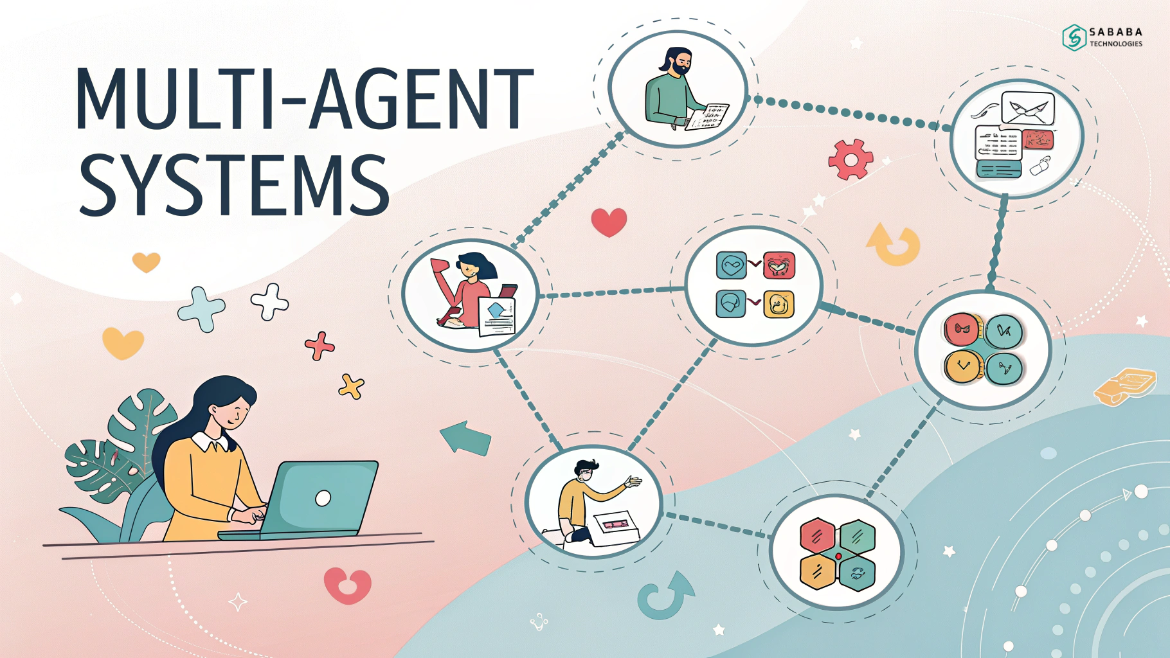
At a foundational level, multi-agent systems consist of multiple autonomous AI agents operating within the same environment. Each agent focuses on a specific responsibility, such as data retrieval, reasoning, validation, or communication. Rather than competing, these agents coordinate through defined rules and shared context.
Unlike monolithic AI setups, multi-agent AI allows tasks to flow naturally between specialists. As a result, systems become easier to scale, debug, and adapt over time.
How multi-agent AI differs from single-agent models
Single-agent architectures rely on one prompt, one model, and one execution flow. While this works for simple interactions, it quickly becomes fragile when tasks expand across domains.
By contrast, multi-agent systems distribute work across purpose-built agents. One agent plans, another retrieves data, while a third formats outputs. Consequently, multi-agent AI handles complexity with greater precision, even though it introduces coordination overhead.
Core architecture patterns in multi-agent systems
Although implementations vary, most multi-agent systems rely on a few recurring patterns:
Hierarchical coordination
A supervisor agent delegates tasks to specialized agents and merges the results. This pattern keeps control centralized and predictable.
Parallel execution
Multiple agents operate simultaneously on independent tasks, then combine outputs. Multi-agent AI thrives here when speed matters.
Sequential refinement
Each agent improves the output of the previous one. This approach works well for content creation, analysis, and review pipelines.
Popular frameworks for multi-agent AI
Choosing the right framework depends on how much control and flexibility you need. Some teams prefer visual tools, while others demand code-level precision.
Visual builders and low-code platforms
Visual tools lower the barrier to entry for multi-agent systems by abstracting orchestration logic.
- n8n enables hybrid workflows where visual flows coexist with custom code
- Flowise supports rapid prototyping with LangChain-based agents
- Zapier Agents focuses on simple automation scenarios
- Vertex AI Agent Builder targets enterprise-grade multi-agent AI deployments
These platforms shine when speed, collaboration, and iteration matter more than deep customization.
Code-first frameworks and SDKs
For complex systems, developers often prefer programmatic control.
- LangGraph offers graph-based state management
- CrewAI structures agents around defined roles
- AutoGen supports conversational agent collaboration
- Semantic Kernel integrates deeply with enterprise ecosystems
While these frameworks demand more effort, they provide unmatched flexibility for advanced multi-agent systems.
Step-by-step: building a simple multi-agent system
Let’s break down a practical approach you can adapt to real projects.
Step 1: Define agent responsibilities
Start by identifying tasks that naturally separate. For example, planning, data access, and response formatting should not live in the same agent.
Step 2: Create a coordinating agent
In most multi-agent systems, one agent acts as the traffic controller. It receives requests, decides which agent should handle them, and tracks progress.
Step 3: Add specialist agents
Each specialist in your multi-agent AI setup should have a narrow scope. This keeps prompts lean and behavior predictable.
Step 4: Design communication rules
Agents must exchange context without flooding each other with unnecessary details. Passing references instead of raw data often improves efficiency.
Step 5: Test, observe, and refine
Finally, monitor how agents interact. Small prompt tweaks or handoff changes often unlock major improvements in system behavior.
Advantages of multi-agent systems
When designed carefully, multi-agent systems offer clear benefits:
- Task specialization reduces reasoning noise
- Parallel execution improves response time
- Isolated failures prevent total system collapse
- Modular agents simplify updates and maintenance
Because multi-agent AI mirrors how human teams work, it often feels more intuitive to scale.
Challenges you should plan for
Despite their strengths, multi-agent systems introduce real trade-offs.
Coordination complexity grows as agents increase. Token usage can spike if communication becomes verbose. Moreover, errors may cascade if validation steps are missing. For secure deployments, multi-agent AI must also guard against prompt injection and untrusted inputs.
Thoughtful architecture—not just more agents—makes the difference.
Multi-agent systems represent a practical evolution in AI design. Instead of stretching a single model beyond its limits, teams now assemble collaborative agent networks that scale with purpose. While multi-agent AI demands careful coordination and monitoring, its benefits often outweigh the complexity in real-world workflows.
By understanding frameworks, architecture patterns, and step-by-step implementation, you can build systems that remain flexible, resilient, and future-ready.
FAQs
1. What problems are best suited for multi-agent systems?
Tasks involving multiple domains, parallel processing, or large context boundaries benefit most from multi-agent systems.
2. Is multi-agent AI always better than single-agent AI?
No. Multi-agent AI adds overhead, so simpler problems may still work better with a single agent.
3. Can non-developers build multi-agent systems?
Yes. Visual tools make multi-agent systems accessible without deep coding knowledge.
4. How do agents share memory in multi-agent AI?
They typically use shared memory stores, message passing, or reference-based handoffs.
5. Are multi-agent systems secure for production use?
They can be, but multi-agent AI requires strict input validation and controlled permissions.
Feeling more like puzzles than solutions? That’s when Sababa steps in.
At Sababa Technologies, we’re not just consultants, we’re your tech-savvy sidekicks. Whether you’re wrestling with CRM chaos, dreaming of seamless automations, or just need a friendly expert to point you in the right direction… we’ve got your back.
Let’s turn your moments into “Aha, that’s genius!”
Chat with our team or shoot us a note at support@sababatechnologies.com. No robots, no jargon, No sales pitches —just real humans, smart solutions and high-fives.
P.S. First coffee’s on us if you mention this blog post!